Company news
Amazon to deploy Cartesian's thermal batteries at European fulfilment centres
Cartesian will supply 30 Thermal Box units to three Amazon fulfilment centres in Europe. The solution acts as a thermal battery, storing heat or cold and releasing the energy when a building requires additional capacity.
By Cartesian
Cartesian will supply 30 Thermal Box units to three Amazon fulfilment centres in Europe. The solution acts as a thermal battery, storing heat or cold and releasing the energy when a building requires additional capacity. The agreement shows how thermal energy storage can help make buildings more flexible.
Large buildings consume significant amounts of energy for heating and cooling. At the same time, peak power demand, grid constraints, warmer summers, electrification and requirements for more energy-efficient operations are putting growing pressure on property owners, logistics operators and industrial companies.
Cartesian will now supply 30 Thermal Box units to three Amazon fulfilment centres in Europe. The delivery follows Cartesian's participation in the Amazon Sustainability Accelerator, where the company was selected from more than 500 applicants.
“This is important proof that thermal energy storage is ready for wider deployment across different types of buildings, with real operational requirements and measurable results.”
The installations are expected to deliver a financial return for Amazon while also contributing to the company's sustainability goals.
Storing heat and cold when capacity is available
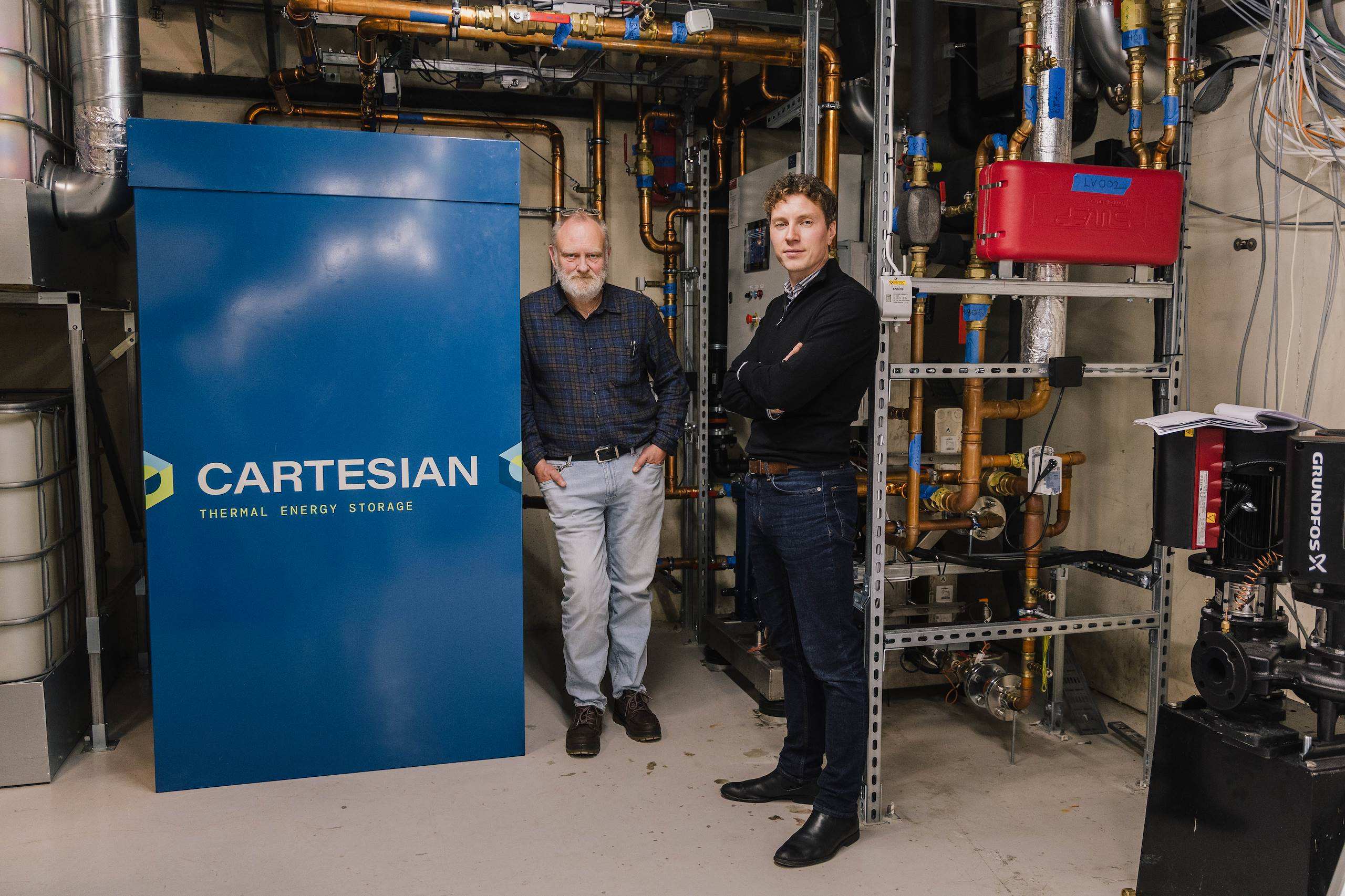
Cartesian's Thermal Box is a modular thermal energy storage solution. The technology makes it possible to store heat or cold when electricity is cheaper and the building's heating or cooling system has spare capacity.
The solution can be integrated into existing heating or cooling systems, helping to increase available heating or cooling capacity without necessarily requiring the building to invest in larger heat pumps, chillers or extensive upgrades to its technical infrastructure.
“Many buildings reach the limits of their heating or cooling capacity sooner than expected. The cooling system may be designed for typical operating conditions, but not the hottest days. The heat pump may cover most of the demand, but not the coldest hours. In other cases, limited grid connection capacity restricts further expansion. Thermal Box is designed for precisely these situations.”
Each module has approximately the same footprint as a Euro pallet and is designed for retrofit into existing building systems with minimal disruption.
From accelerator to operational installations
The Amazon Sustainability Accelerator is a programme for start-ups and scale-ups developing technology in areas including buildings and energy use, sustainable water management and biodiversity. The programme has now led to installations of Cartesian's Thermal Box in Amazon's European operations.
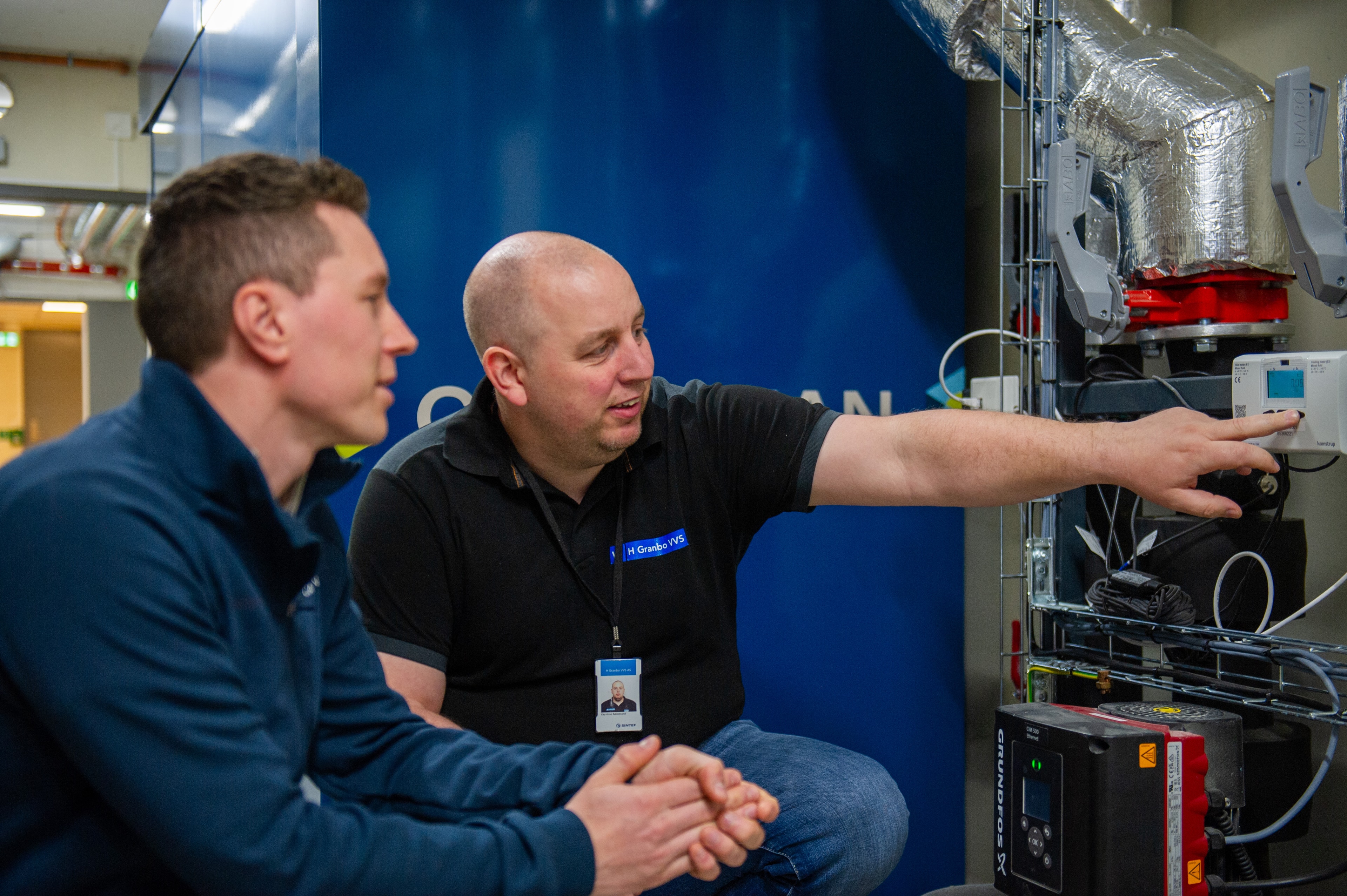
“We have worked closely with Amazon's sustainability and operations teams to integrate the technology into Amazon's building systems and day-to-day operations.”
The installations will provide operational data that can inform any future deployment decisions. These installations show how thermal energy storage can support more flexible energy use in buildings.
“Electrification and growing cooling demand mean that buildings need to become more flexible. We will need solutions that can relieve pressure on the grid, reduce peak loads and make better use of existing infrastructure. Thermal batteries can provide some of that flexibility.”
Relevant to logistics, data centres and district heating and cooling
Cartesian's Thermal Box can be used in commercial buildings, logistics facilities and data centres, as well as in district heating and cooling systems.
The technology is particularly relevant where buildings require additional heating or cooling capacity, but where space, noise, investment costs or grid capacity make conventional expansion difficult.
“Our ambition is to turn large buildings into more flexible energy assets. When heat and cold can be stored and released at the right time, building owners gain greater control over capacity, costs and their carbon footprint. The Amazon agreement is an important step in demonstrating that this can be scaled.”